Debt Snowball vs. Debt Avalanche: Which Payoff Method Wins?
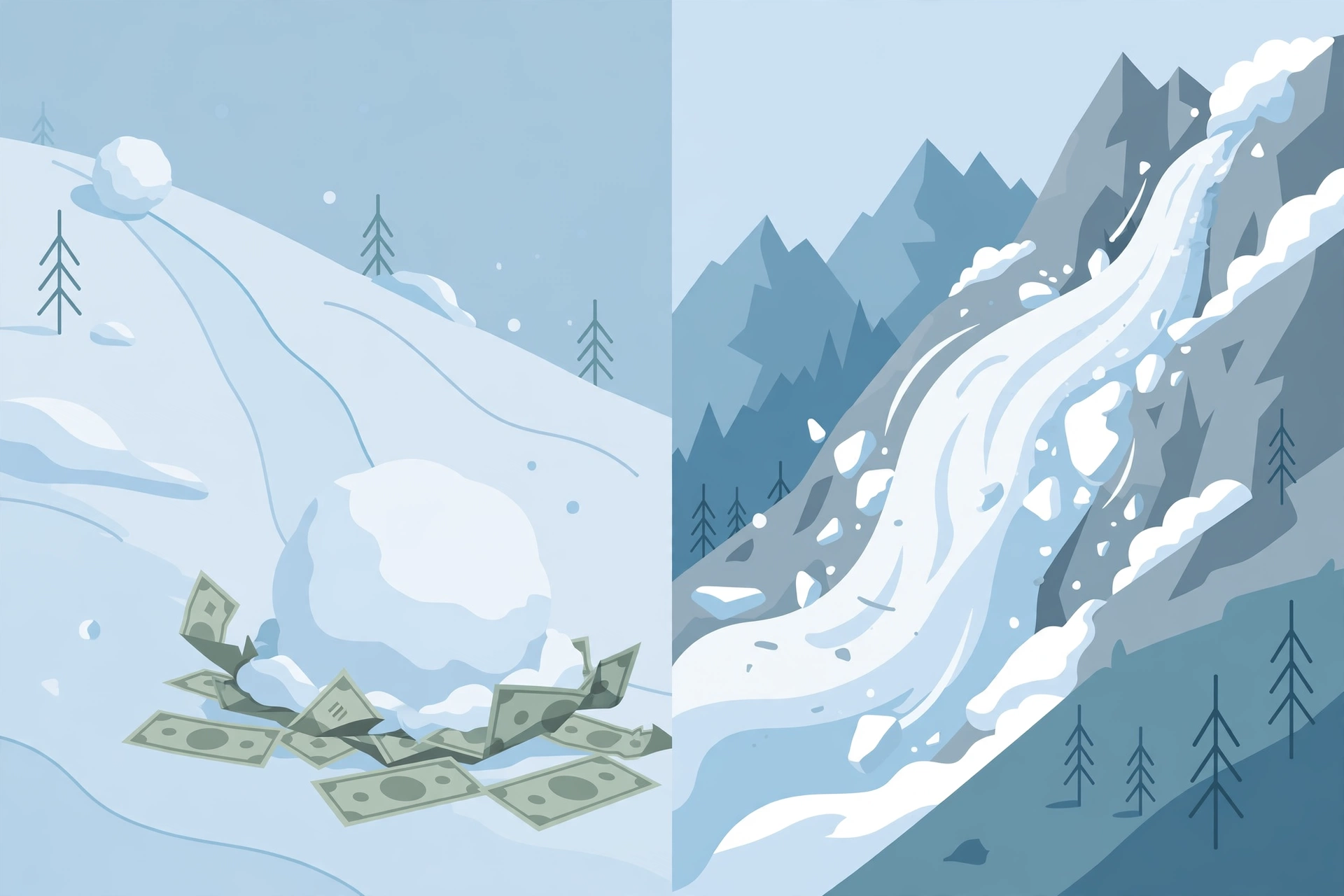
When you have several debts, the order you pay them off matters — for your wallet and your motivation. Two methods dominate every personal finance book ever written. Here's how they work and how to pick yours.
In-article ad slot — paste Google AdSense code here
The debt snowball: smallest balance first
List your debts from smallest balance to largest, ignoring interest rates. Pay minimums on everything, then throw every extra dollar at the smallest debt. When it's gone, roll that whole payment into the next smallest. Your payment "snowballs" bigger with each debt you kill.
Example:
- Store card: $400 at 24%
- Credit card A: $2,100 at 19%
- Credit card B: $5,800 at 16%
- Car loan: $11,000 at 7%
With the snowball, you attack the $400 store card first. It's gone in a month or two — and that quick win keeps you going.
The debt avalanche: highest interest first
Same idea, different order: list debts by interest rate, highest first. Every extra dollar goes to the most expensive debt. Mathematically, this always saves you the most money, because high-interest balances grow the fastest.
In the example above, you'd attack the 24% store card first (conveniently also the smallest), then the 19% card, and so on.
So which one is actually better?
On paper, the avalanche wins — it minimizes total interest paid. In real life, it's closer than you'd think. Researchers at Harvard Business Review studied this and found that people using the snowball method were significantly more likely to stick with their plan and eliminate all their debt. Quick wins create momentum, and momentum beats math when motivation is the bottleneck.
Pick the method you'll actually follow for two years, not the one that looks best in a spreadsheet for two minutes.
A practical way to choose
- You've quit payoff plans before → snowball. You need wins early.
- You're disciplined and hate wasting money → avalanche. You'll save hundreds or thousands in interest.
- Your highest-rate debt is also small → congratulations, both methods agree — start there.
Making either method work
- Stop adding new debt. Neither method works if balances keep growing. Freeze the cards — literally, some people put them in a freezer bag of water.
- Automate minimums so nothing is ever late (late fees are the enemy).
- Find your "extra" amount — even $50/month above minimums changes the timeline dramatically.
- Track it visually. A paper chart on the fridge where you cross off debts beats any app for most people.
What about a hybrid?
Many people do a sensible blend: knock out one tiny debt first for the psychological win, then switch to avalanche order for the rest. There's no rulebook — the best method is the one that gets you to zero.
Whichever you choose, run the numbers once so you know your debt-free date. Having a finish line changes everything.